
In recent years outbreaks of arthropod transmitted viruses (arboviruses) and zoonotic viruses (viruses that jump from animals to humans) have increased with significant public and veterinary health implications. Diverse factors including climate change and various anthrogenic factors will drive the emergence and re-emergence of viruses. Climate change influences the survival and abundance of mosquitoes and ticks, and facilitates the geographic spread of these vectors; while changes in land use, travel and trade, and population growth increase potential for exposure. In addition, evolution of viruses can facilitate spread and adaptation to new vectors. The potential for spread and expansion of endemic regions highlights the importance of improved surveillance, diagnostics and raised awareness.
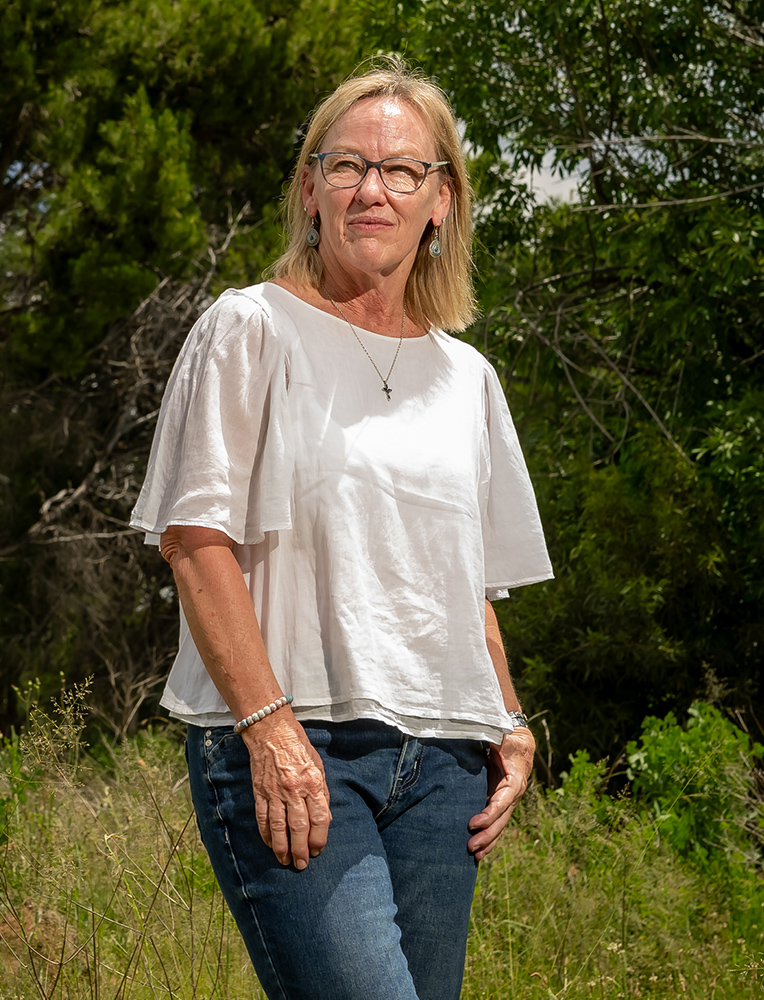
Surveillance is the cornerstone of preparedness for epidemics, or pandemics. The research of Prof Felicity Burt, NRF Research Chair in Vector-Borne and Zoonotic Pathogens in the Division of Virology, Faculty of Health Sciences, at the University of the Free State (UFS), uses a One Health approach for surveillance of vectors, people and livestock to identify currently circulating viruses and their interaction with different hosts in nature. The research also involves community engagement among rural farmers.
Prof Burt’s research primarily aims to determine the prevalence and distribution of known and novel arboviruses circulating in the country. Her view is that improved and regular surveillance is key and essential to pandemic preparedness. To achieve this goal, Prof Burt, an expert in arbovirology, has developed multiple assays to detect and identify viruses circulating in our region (southern Africa), and to investigate their medical or veterinary impact. Her research group engages with communities to understand their knowledge and awareness of zoonotic diseases which they are at risk of exposure due to their occupational activities and their practices to avoid infection.
Surveillance of mosquitoes was routinely undertaken during the 1970s and 1980s, confirming the presence of various arboviruses with public health implications in the country. However, although numerous viruses had been detected historically, the current situation and the prevalence 50 years on, was largely unknown. In her research article entitled, Arbovirus surveillance detects mosquito-borne viruses in central South Africa published in Virology in 2025, Prof Burt and colleagues confirmed the presence of West Nile, Sindbis and Middelburg viruses in mosquitoes collected in the Free State and identified local circulation of Bagaza, Bunyamwera, Germiston and Witwatersrand viruses. Similarly, in her article titled, Identification of arboviruses in mosquito populations in Kwazulu-Natal, South Africa and the first record of Wyeomyia mitchelli in the Old World published in PLoS Neglected Tropical Diseases in 2025, the circulation of Sindbis, Witwatersrand and Bunyamwera viruses was confirmed in KwaZulu-Natal. These viruses have potential to cause outbreaks of disease in humans and/or domestic livestock especially following heavy rainfall facilitating increased mosquito populations.
Developing methods for virus discovery is also an important aspect of the research. Using a novel metagenomics-based technique for virus discovery, Prof Burt’s laboratory has been able to detect a tick-borne virus not previously known to occur in South Africa. The significance of this virus globally is currently under investigation, and we will continue to determine its prevalence and significance in South Africa.
To ensure that the world is better prepared for future diseases and pandemics, the World Health Organization (WHO) created an initiative called the Preparedness and Resilience for Emerging Threats (PRET). It is an innovative approach to improving disease pandemic preparedness. It recognises that the same systems, capacities, knowledge, and tools can be leveraged and applied for groups of pathogens based on their mode of transmission. Together with the African Union Commission and Africa Center for Disease Control released the Zoonotic Disease, Prevention and Strategy (2025–2029). This One Health Approach highlights the importance and global concern regarding potential for significant outbreaks and pandemics.
The United Nations Sustainable Development (UN SDG) Goal 3 aims to achieve good health and well-being for all by 2030. However, there continue to be many challenges including ending the epidemics of AIDS, tuberculosis, malaria and combating hepatitis, water-borne, and other communicable diseases.
The distribution and awareness of arboviral diseases in many African countries is also an unknown phenomenon. There is currently limited genomic data for informing emergence, diagnostics, vaccine development, virus evolution, pathogenicity, or host interactions. In this regard, Prof Burt’s research and application of cost-effective genomic sequencing will play a key role in identifying the spread and transmission of viral lineages, and provide key information for development of diagnostic tools, vaccines and countermeasures to mitigate disease.
The researchers have made significant contributions towards the global knowledge on CCHFV, a tick-transmitted zoonosis with a 30% fatality rate in South Africa. They have published complete genome sequences for African isolates which currently are limited on public databases, as well as confirming that natural genome reassortant strains circulate.
Human, animal, and vector surveillance contributes towards early warning of emergence, or spread, or spillover events, that could result in disease outbreaks. In this regard, the research of Prof Burt uses a One Health approach to investigate and monitor emerging and re-emerging arboviruses using cost-effective technologies that could be applicable for low-resource settings.
The research programme will also consider the potential impact on public health in the context of climate change, as this has a direct impact on the dispersal of arthropod vectors and the subsequent spread and emergence of disease. The targeted pathogens in the research programme include viruses prioritised by the WHO for research due to the lack of treatment and/or vaccines and potential to cause significant outbreaks which could be precipitated by climate change. Understanding how these pathogens cause disease is key to future therapeutics and vaccines.
To date, Prof Burt has graduated 28 BMedSc (honours) students, 23 MMedSc students and 11 PhD students. Eight postdoctoral fellows have been mentored. She is currently supervising five MMedSc, and six PhD students and mentoring one postdoctoral fellow. Five former students completed their entire postgraduate education with the research group from honours to PhD.
The team work closely to collect and identify mosquitoes and ticks. Students that have never had the experience of visiting a national game park have participated in field trips to the Kruger National Park and Mokala National Park. The team have shared their knowledge during community engagements and arranged visits to schools to educate learners on the risk of zoonotic disease and how to take care of their pets. Rabies is a significant threat in the Free State with children being infected from stray dogs. Knowing the risks and what to do could save lives.