
The 21st century is characterised by several changes that warrant frequent innovations in science, technology, engineering, and mathematics (STEM) subjects’ curricula. STEM education is one of the national strategic goals in South Africa, the National Strategy for Mathematics, Science, and Technology Education (2019–2030), which aims to equip young people with the necessary mathematics, science, and technology future-proof knowledge and competencies to be functional in the rapidly evolving world. STEM education is viewed by governments and world bodies such as the United Nations as a strategy to develop innovative talent in citizens to meet the economic development, environmental and social well-being needs of the 21st century.
In fact, STEM education is so important that one of the world’s biggest and fastest-growing social media platforms, TikTok, introduced a dedicated STEM tab in 2023. According to the Global Digital Report, 15.5% of active social media users between the ages of 16–24 say TikTok is their favourite social platform. In a blogpost announcing the STEM feed, the social media platform, the fifth most-popular social network by active users, currently boasting more than 955 million active users worldwide, wrote it is “a new viewing experience that will give our community a dedicated space to explore a wide range of inspiring, entertaining, and enriching videos related to science, technology, engineering, and math.” STEM-related hashtags received over 110 billion views shortly after it was announced. Whether encouraging aspiring scientists to work out experiments in comments sections or helping a new programmer learn to code, the STEM feed provides a space for co-learning, inspiration, and enrichment.
Besides being aligned to national strategies for development, STEM education also aligns with the content and nature of most Sustainable Development Goals (SDGs) which include Good Health and Well-being; Clean Water and Sanitation; Affordable and Clean Energy; Decent Work and Economic Growth; Sustainable Cities and Communities; Responsible Consumption and Production; Climate Change; Life Below Water; Life on Land; and Quality Education.
One of the aims of SDG 4 is to substantially increase the supply of qualified teachers, including through international cooperation for teacher training in developing countries, especially least developed countries and small island developing states, by 2030. It is also aligned to a major aspiration of the African Union, Agenda 2026 of realising a prosperous Africa based on inclusive growth and sustainable development. This aspiration requires well-educated citizens and skills revolutions underpinned by science, technology and innovation developing Africa’s human and social capital.
To ensure that all learners acquire the knowledge and skills needed to promote sustainable development, including through education for sustainable development and sustainable lifestyles, among others, there is a need to start with how preservice and in-service teachers are trained and educated to implement the curriculum innovations.
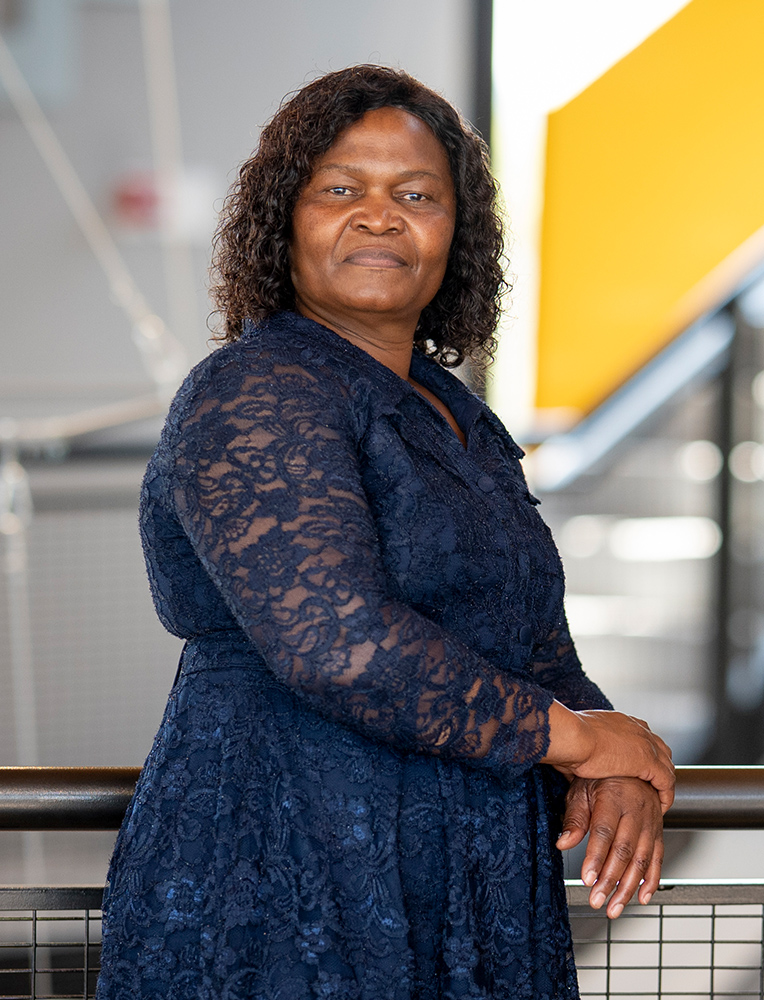
As the curricula transform, teacher training programmes have to keep up with or anticipate the imminent innovations. Accordingly, Prof Maria Tsakeni, an Associate Professor and the Head of the Department of Mathematics, Natural Sciences and Technology Education, is focused on understanding teaching and learning in the wake of technological advancements and curriculum innovations driven by developmental needs and changes in society. The broader goal of her research is premised on the need to explore how preservice and in-service teachers develop the necessary pedagogical content knowledge to implement the curriculum innovations responsive to the 21st century environments namely, the STEM education agenda, Education for Sustainable Development (ESD), Indigenous Knowledge Systems (IKS), and innovative instructional strategies for the development of 21st century skills such as inquiry-based learning and the use of educational technologies are pervasive in South African higher education and increasingly becoming ubiquitous in schools and society at large.
In the study Exploring Design Principles for STEAM Learning Activities Development by Science and Technology Teachers, Prof Tsakeni explored the design principles of science, technology, engineering, arts, and mathematics (STEAM) learning activities developed by science and technology teachers for classroom practice. The findings of the study showcase the design principles to include design thinking, finding solutions for learning problems, creativity, and innovation applied to instructional design. The study recommends the use of design thinking pedagogies in developing teacher knowledge on STEAM classroom practice.
The implementation of the innovations in classrooms has implications for multiple-deprived classroom environments and is thereby directly linked to the realisation of SDG 4 on Quality Education. Multiple-deprived environments are characterised by a number of unmet social needs. Teacher training is one of the ways of making sure that learners are adequately prepared in 21st century skills in STEM classrooms, hence the calls to develop STEM teachers in the curriculum innovations implementation. Preservice teachers should be prepared to integrate 21st century skills such as computational thinking in their future classrooms and different subject areas. Similarly, UNECE (2011) emphasises the need for preservice teachers to develop the competencies necessary for the implementation of education for sustainable development in ways that holistically address the sustainable development challenges.
With the study Preservice Primary Teachers’ Perceptions of STEM-Based Teaching in Natural Sciences and Technology Classrooms, Prof Tsakeni recommends that preservice teachers be taught to link STEM activities with the development of specific STEM skills. This study explored the perceptions of preservice teachers of STEM-based teaching in natural sciences and technology classrooms. The teaching of natural sciences and technology in primary schools presents an opportunity to use innovative approaches to teach STEM-based activities. The subject presents opportunities for learners to experience STEM-based instructional approaches in their early school years; therefore, it is essential that preservice primary school teachers are adequately prepared for the task.
Aligning to the UFS’ vision of being a research-based university, the research conducted is based on the scholarship of teaching and learning. Prof Tsakeni is a recipient of a First Award in the Category of Research in Teaching and Learning Advanced in 2022 at the UFS. The training and preparation of teachers is conducted through a digitalised curriculum that integrates current drives on classroom technologies, integration of the curriculum innovations of the STEM education imperatives, Education for Sustainable Development, and Indigenous Knowledge Systems.
The teaching and learning impact goes beyond the borders of South Africa because Prof Tsakeni also led the development and teaching of 10 Short Learning Programmes (SLPs) to more than 200 Lesotho Mathematics and Science teachers in 2024. The SLPs were based on curricula that include content knowledge, teaching methods, use of technologies in the classroom, curriculum development for teacher professional development in the use of technologies, and instructional leadership in the implementation of digitalised school curricula.