
The interface between justice for Africa and reparation is deduced from the continent’s stagnation despite global advancements in technology, science, and human capital development. Since 1963, the Organization of African Unity (OAU) and its successor, the African Union (AU), have supported initiatives to advance justice for historical crimes and the payment of reparations to Africans, as well as the restitution of cultural artefacts and heritage pillaged during the periods of colonisation and enslavement. These sensitive subjects were addressed at the 2001 World Conference against Racism, Racial Discrimination, Xenophobia and Related Intolerance held in Durban, South Africa, which culminated in the adoption of the Durban Declaration and Programme of Action. The declaration acknowledged the appalling tragedies of racism, racial discrimination, xenophobia, and related intolerance, including slavery and the transatlantic slave trade. It emphasised the need for victims of these human rights violations to have access to justice, legal assistance, and effective protection and remedies. The conference also urged states to reinforce protection against racism, racial discrimination, xenophobia, and related intolerance by ensuring that all persons have access to effective and adequate remedies and enjoy the right to seek – from competent national tribunals and other national institutions – just and adequate reparation and satisfaction for any damage because of such discrimination.
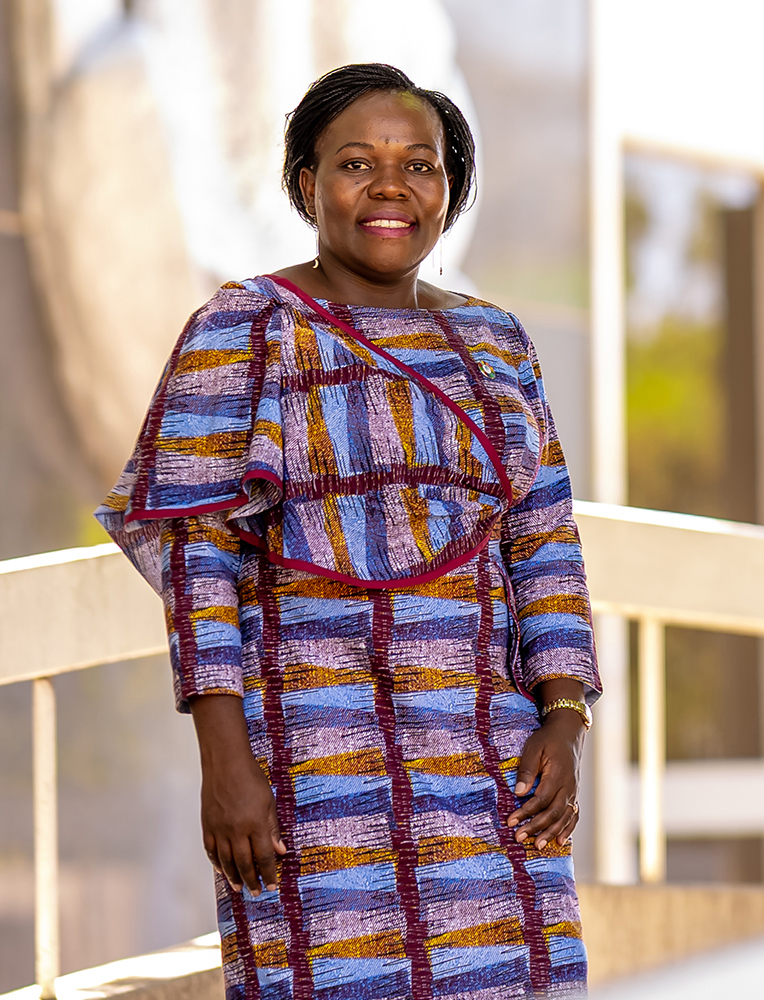
The University of the Free State Africa Reparations Hub (UFSARH), under the leadership of Prof Catherine Namakula, an Associate Professor in the UFS Department of Public Law, is conducting evidence-based transdisciplinary research on reparatory justice for Africa, addressing the legacies of the past, including four centuries of enslavement, colonialism, apartheid, and contemporary forms of extortion. In so doing, the UFSARH is contributing to both the UN’s Sustainable Development Goal (SDG) 16, which focuses on peaceful and inclusive societies and access to justice, as well as the AU’s Agenda 2063, which emphasises justice and development for Africans. The AU raised the profile of this subject by Peace, justice and rule of law declaring ‘Justice for Africans and People of African Descent through Reparation’ as the theme of the year 2025 and as the theme of the decade (2025–2034). This UFSARH research is filling the gap for African though leadership and intellectual support for pursuits of reparatory justice – including those by Libya against Italy through the Treaty of Friendship, Partnership and Cooperation of 2008; the Nama and Herero of Namibia against Germany for colonial genocide, which culminated in the Namibia-Germany Reconciliation Agreement of 2021; the Khulumani Support Group of South Africa against US companies for their contribution to repression mechanisms during apartheid; the Mau Mau veterans of Kenya against the United Kingdom for colonial violence, which led to the settlement agreement of 2013; the Africa diaspora’s quest for restitution of cultural property; and the Caribbean Community against former colonial powers.
In the research article titled, The Rugged Trajectory of Africa’s Reparations Agenda: From Aspiration to Claim and Action published in the South African Yearbook of International Law (DOI: 10.25159/2521-2583/15034), Prof Namakula concludes that Africa must advance its claim for reparation in a manner that is authoritative and effective, including by way of a legal claim, high-level political strategy, and the development of a continent-wide social movement for reparations. “History shows that political approaches complement legal approaches effectively in advancing reparatory justice agendas. Pursuing reparations should be conceived as a multi-faceted, transgenerational role that is backed by principles, sustainable institutions, high-level diplomatic endeavours and scholarly work. The ad hoc individualised endeavours for reparation to Africa need to be substituted by structured, institutionalised and consistent mechanisms that translate efforts into a resilient movement,” she writes
In an article published in the African Yearbook on International Humanitarian Law titled, Reparations without reparation: A critique of the Germany–Namibia Accord on colonial genocide (DOI: 10.47348/AYIH/2021/a2), Prof Namakula argues that reparation is meant for effect: to make amends. The offer of €1.1 billion by the Federal Republic of Germany to the Republic of Namibia, in an agreement of June 2021, for the genocide committed during the colonial-era occupation encourages debate about the categorisation and effect of the payment in the fields of human rights and international criminal justice. The genocide was characterised by the loss of the lives of thousands of people among the Nama and Herero people of Namibia between 1904 and 1908. In a pioneering analysis, this article reiterates the principles of reparation in international criminal jurisprudence as a yardstick for this significant gesture of remorse. Reparations must meet both procedural and substantive requirements: they must be proportional, appropriate, prompt, and adequate, and they must culminate from a process that ensures the meaningful participation of victims and judicious regard for all relevant factors and circumstances. Reparations for the sake of it, without the remedial effect, make a mockery of justice.
The hub curates resources and consolidates a continental resource database for Africa’s reparations, comprising evidence of violations, scholarship reflecting African perspectives on the subject, jurisprudence on reparation, and the progression of political developments. Such a resource base, embodying an extensive array of materials on reparation, would aid research and scholarship towards the progression of the African claim. The UFSARH is also leading a book project on developing the guiding principles of Africa’s reparations. This book would be a pioneering compendium of principles on Africa’s reparations, which would support the development of continental principles at a diplomatic level. A standard is required for emerging reparatory justice endeavours meant for Africans and people of African descent. Reparations per se are legitimised by meeting the expectations of beneficiaries; this makes the African voice critical in articulating what reparation means for the continent. Scholars are analysing six critical questions:
i) What harm was occasioned to Africa by enslavement, colonialism, and contemporary forms of extortion?;
ii) What are the procedural and substantive guarantees of reparatory justice?;
iii) Can the crimes of enslavement and colonialism be time barred?;
iv) What are the determinants of a reparatory effect?;
v) How is jurisdiction over crimes of enslavement and colonial aggressions established?;
vi) What is the corporate responsibility for enslavement and colonialism?
The UFSARH initiated, led, and hosted a collaborative colloquium among law schools on the continent including the University of the Western Cape’s African Centre for Transnational Criminal Justice, the Faculty of Law at the University of Ilorin, Nigeria, Strathmore Law School, and the Africa Judges and Jurists Forum. It was held in May 2025 with a focus on mainstreaming reparatory justice in legal education in Africa. This successful dialogue centred on the colonial underpinnings and traits of law curricula and legal practice on the continent. A 10-point agenda for reparatory justice in legal education in Africa was adopted. The future research of the hub would demystify each agenda item and popularise the ideals of the initiative, including instigating the African conscience in legal education; advancing justice-centred pedagogy; modelling legal education around community-based justice systems; promoting African agency over knowledge production; promoting understanding of the structural roots and facilitators of injustice; promoting sensitivity to the digital divide and encouraging digital reparation in the use of AI and other technologies; and encouraging a comparative conceptual understanding of reparatory justice, racial justice, spatial justice, digital justice, environmental justice, and economic justice.
The UFSARH team comprises a multinational pool of academics and postgraduate researchers from Botswana, the Democratic Republic of Congo, Uganda, Zimbabwe, South Africa, Lesotho, and Nigeria.