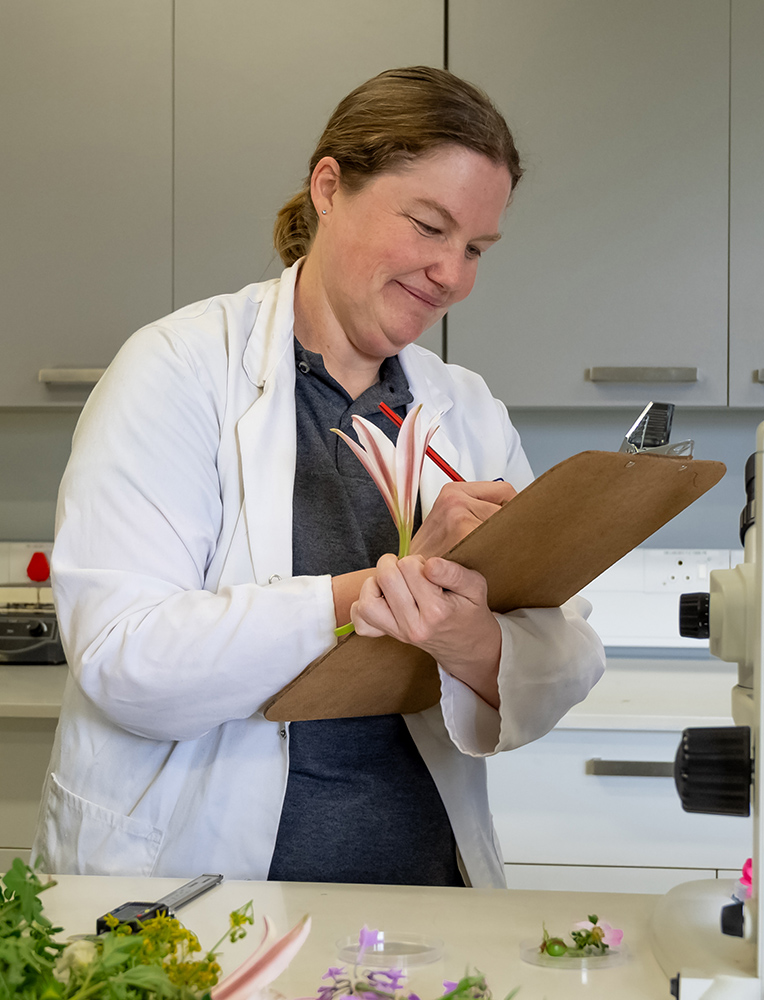


Pollination is the process of transferring pollen from the male part of a flower to the female part, being a crucial step for plant reproduction that leads to the formation of seeds and fruit. This process enables plants to reproduce, providing food security and supporting ecosystems by forming the base of the food web, purifying water, and cycling carbon. Pollinators are the animals that transfer the pollen between plants and are thus essential for food security and environmental health.
Unfortunately, pollinator populations are experiencing significant declines due to a range of environmental and anthropogenic stressors that make it harder for them to survive and do their important work. Habitat degradation and fragmentation reduce the availability of foraging resources and nesting sites, disrupting essential ecological processes. Additional threats such as pollution, the widespread use of pesticides, the spread of invasive alien pests and plants, shifts in land use, and the impacts of climate change have all been linked to declines in both the abundance and diversity of pollinators, particularly among insect species.
In a collaborative study with scientists from the University of KwaZulu-Natal, Prof Sandy-Lynn Steenhuisen, Subject Head and Associate Professor in the Department of Plant Sciences at the University of the Free State’s (UFS) Qwaqwa Campus is a pollination ecologist, and she and colleagues made a major discovery of the first record of a lizard pollination system in continental Africa. This phenomenon is only well-known from oceanic island ecosystems where pollinator communities are limited to those who could get to the islands. Mountains represent similar systems as so-called “sky islands” and pollinator communities are heavily influenced by harsh montane climates up elevation gradients.
One of the United Nations (UN) Sustainable Development Goals (SDG 15) is to conserve mountain ecosystems, including their biodiversity, to enhance their capacity to provide benefits that are essential for sustainable development.
Mountains are extremely important for the health and well-being of the environment. The Rio+20 Conference outcome document, The Future We Want, highlights the importance of mountain regions for sustainable development. Mountains provide water for a large part of the world’s population and are home to many indigenous peoples and local communities. The Future We Want points out that mountain ecosystems are fragile and easily harmed by problems such as climate change, deforestation, land use changes, land degradation, natural disasters, and the marginalisation of mountain communities. Because of this, it encourages countries to work together, involve all important groups, and share their knowledge. It also calls for long-term, holistic plans that include special policies for mountain areas – such as poverty-reduction programmes – especially in developing countries.
Prof Steenhuisen leads the Qwaqwa Plant-Animal Interactions Research (Q-PAIR) group whose research goals are founded on three thematics areas, of pollination ecology, invasive species impacts and management, and the monitoring and conservation of natural biodiversity. The group specialises its research on mountain ecosystems.
The vision of the Q-PAIR group is for a Southern Africa where plants and animals thrive together in healthy, diverse mountain ecosystems. Their mission is thus to advance collaborative ecological research on plant-animal interactions, to understand the impacts of climate change and invasive species on mountain ecosystems and develop creative response strategies. The Maloti-Drakensberg Mountains of Qwaqwa provide a unique laboratory for such multi- and trans-disciplinary research.
In one of her many collaborative research articles titled, The role of plant–pollinator interactions in structuring nectar microbial communities, published in the Journal of Ecology, Prof Steenhuisen and colleagues from the University of Seville in Spain, explore the importance of plant-pollinator interactions in the assembly of the nectar microbiome and study the role of plant geographic location and pollinator system as a determinant of microbial community composition. The results showed that plant-pollinator interactions played a crucial role in shaping nectar microbial communities. Plants visited by different pollinator guilds supported significantly different yeast and bacterial communities. The pollinator guild also contributed to the maintenance of beta diversity and phylogenetic microbial segregation. With long-time collaborator from Cornell University, Prof Robert Raguso, and emerging researcher Dr Nora Mitchell from the University of Wisconsin-Eau Claire, in the US, they are now moving into how the often-invisible communities of microbes have played a role in the evolution of the great diversity of proteas we enjoy today. A whole world of plant-animal interactions is still waiting to be uncovered and these discoveries continue to enrich our academic lives.
The Q-PAIR group is part of the Afromontane Research Unit (ARU) at UFS Qwaqwa Campus. A key objective of the ARU is to contribute intellectually and practically to the sustainable development discourse of the Maloti-Drakensberg as a unique social-ecological system. The ARU has a well-developed network of scientists that focuses of addressing “wicked” problems in montane ecosystems. One of those is the increasing loss of diverse Afromontane grasslands to encroaching woody plants, both invasive and native. From an interactions point of view, many of these plants are in the family Rosaceae and produce red-orange berries at times when grasslands are meant to be dormant.
The presence of these fleshy-fruited plants in these ecosystems is changing not only the plant communities that they smother, but the animal communities as frugivores expand their ranges to take advantage of this novel food source. This research gap allowed the creation of the Northern Temperate Weeds group, led by UFS affiliates from the Centre for Biological Control, Rhodes University, Prof Grant Martin and Dr Kim Canavan.
In addition to undertaking groundbreaking research on the “wicked” problems in montane ecosystems, the Q-PAIR group and ARU train the next generation of ecological scientists who research and learn how to manage invasive wattles with facilitated spread of gall-forming wasps and seed-eating weevils, and reintroduce eland as biocontrol agents, as part of larger community-informed and stakeholder-involved research aims.
Prof Steenhuisen is also part of the ARU’s international project, RangeX, led by Prof Ralph Clark, ARU Director and Dr Jake Alexander from ETH Zurich, Switzerland. This multi-disciplinary global project investigated the impacts of range-expanding plant species under global warming conditions. Prof Steenhuisen and her postdoctoral fellow Dr Stephanie Payne tracked weather conditions and pollinator interactions with alpine plant species in warming chambers using camera traps and machine-learning techniques. This collaboration also led to the creation of the highest research station in Southern Africa on top of the Amphitheatre in the Maloti-Drakensberg in partnership with the ARU, Transfrontier Parks Destinations and Witsieshoek Mountain Lodge.
In the study, The invasive grass genus Nassella in South Africa: A synthesis, published in the South African Journal of Botany, Prof Steenhuisen’s doctoral student, Dr Anthony Mapaura (now an ARU postdoctoral fellow) highlighted the invasive nature, ecology and major impacts that Nassella invasions cause in terms of biodiversity, soil productivity, and the economy based on literature. Nassella is a grass genus with about 116 species that occurs predominantly in South America with Nassella trichotoma and a couple of other species being naturalised in South Africa.
These grasses are harmful to livestock, with dense invasions leading to huge losses and costs to the animal husbandry industry and tourism, and severe impacts on biodiversity, especially in the mountain grassland regions of South Africa. Globally, mountain areas are very important and contribute immensely to biodiversity and cannot afford the threat from these invasive species. These mountains are home to many endemic, range-restricted and threatened species, and the continued expansion of these invasive grass species will likely contribute to their decline. The need to understand the status of these species in South Africa and to institute control measures is important and urgent.