
Peace and security are a necessary precondition for the economic and social development of any society and nation. It is in this context that the African Union (AU) called for a peaceful and secure Africa – a key aspiration of Agenda 2063. This was further emphasised in the theme of ‘Silencing the Guns by 2020’ which underlines the necessity of making the continent’s mechanisms for conflict prevention, management and resolution operational at all levels.
Despite the progress made towards resolving some conflicts, silencing the guns on the continent has been elusive and as a result, the 14th Extra-Ordinary Session of the AU Assembly, held on December 6, 2020, in Johannesburg, South Africa, extended the timeline to 2030. With an estimated 18 900 fatalities linked to “militant Islamist” violence in Africa in 2024, according to the Africa Center for Strategic Studies, and over 3 400 terror attacks on the continent which resulted in over 13 900 fatalities as recorded by the AU Counter-Terrorism Centre, the 2030 deadline is again at risk of not being achieved.
Fatalities and violent events linked to “militant Islamist” groups in Africa sustained near record pace, with the Sahel and Somalia accounting for 79% of related deaths. At a United Nations (UN) Security Council meeting, focused on strengthening counter-terrorism on the continent, convened by Algeria, the Council president for January, Ms Amina J. Mohammed, Deputy Secretary-General of the UN and Chair of the UN Sustainable Development Group, emphasised that terrorism is the most significant threat to peace, security and sustainable development across Africa today. She presented sobering statistics outlining its devastating toll indicating that “sub-Saharan Africa now accounts for nearly 59% of all terrorism-related deaths globally.”
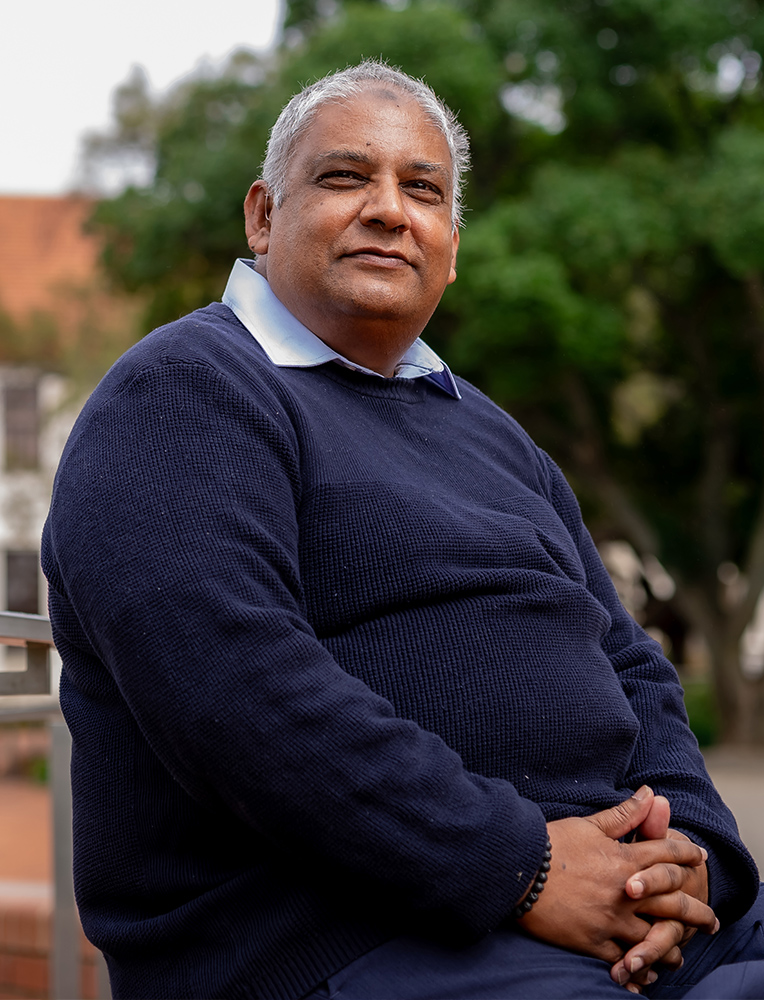
With Africa being considered as the epicentre of global terrorism, based on the number of terror attacks, their severity and lethality, it is both necessary and imperative that political and other solutions are informed by research and scholarship. It is this context that informs the research undertaken by Prof Hussein Solomon, Senior Professor at the Centre for Gender and Africa Studies at the University of the Free State (UFS), on the understanding of any and all international non-state actors that perpetrate terror on the African continent. His work focuses on issues of radicalisation which examines the process of recruitment, and this involves the psychological condition of individual recruits – their motives for recruitment, and the reason to kill and die for the cause of the group.
The research also includes the understanding of radical ideological and religious fundamentalism and why these ideas have not been challenged by mainstream theologians. The context in which this radicalisation takes place is also examined in his research, which may include issues of political alienation, economic underdevelopment, or even the impact of climate change. The latter is evident in the Sahel, where there is increased conflict caused by the scarcity of arable land as a result of desertification. Terror groups in the region exploit such tensions and add their pernicious ideology to the mix.
Prof Solomon has published more than 340 books, book chapters and peer reviewed scholarly papers on this and related topics. In the chapter Getting counter-insurgency right in Africa, published in the book Between Promise and Peril: African Security in the 21st Century, Moscow: Institute for African Studies of the RAS, ISBN 978-5-91298-293-4, Prof Solomon identified seven ingredients of a successful counter-insurgency operation. These include recruiting the right people with the appropriate level of skills and integrity into the security services, preventing the penetration of the security apparatus by insurgents, subversives and their sympathisers, and actively looking after the well-being of the state security forces, especially rank-and-file troops. Similarly, armed forces need to use proportional rather than excessive force in their operations and especially respect the human rights of the civilian population. It is equally important to constantly upgrade the skills and education levels of the armed forces so that their military doctrine, strategy and tactics are superior to those of the non-state actors.
Research has also highlighted the need to ensure that counter-intelligence operations are intelligence-driven. Lastly, whilst the immediate focus of the state would be on degrading the insurgents’ military capabilities, it is imperative that real grievances of the affected population are addressed, including the social and economic development of regions.
Prof Solomon’s current research focus is on two regions on the continent, Southern Africa, in particular northern Mozambique and the Sahel region, specifically northern Nigeria. The focus of the research in these regions is on elucidating and understanding the reasons for the longstanding failure of the respective counterterrorism initiatives. In the case of Mozambique, it is particularly stark since both Rwanda and the Southern African Development Community (SADC) were involved in the counter-insurgency campaign against the non-state actors, but the terror threat has grown with signs that it is spreading beyond the Cabo Delgado into other provinces. In the case of northern Nigeria, despite the deployment of 40 000 troops the insurgency has grown in strength. Despite the support of the neighbouring countries and the broader international community this insurgency has expanded to neighbouring states. Understanding why this is so and what can be done is the core of current and future research.
Universities as institutions of society, are expected to produce knowledge, skills for the benefit of such societies. Developing countries on the continent, including South Africa require these institutions to research, understand, critique and propose solutions for intractable problems.
Prof Solomon’s research is thus policy-oriented. Each research paper advises the reader what the challenges are for counter-terrorism, and what could be done to ameliorate the threat posed. Consequently, over the course of three decades focused on counter-terrorism, he had the opportunity to advise, lecture and train members of the armed forces of several countries as well as the broader intelligence community, the AU, the North Atlantic Treaty Organisation and the UN. In addition, he has been involved with several local and international NGOs involved in counterterrorism initiatives, peace and conflict resolution efforts and attempt to bolster deradicalisation efforts. Prof Solomon is also an officer in the South African Air Force Reserves. He has been ranked among the top 100 terrorism experts in the world by ScholarGPS with a ranking of #93.